There are few places like Shepherd Center, not just in what it does, but in what it represents. It’s a place built on relentless innovation and human resilience, where progress is measured not only in outcomes but in moments of courage and connection.
From brain and spinal cord injury rehabilitation to stroke, multiple sclerosis, and complex neuromuscular care, Shepherd Center has created one of the most comprehensive rehabilitation ecosystems in the world. But what truly sets it apart is its spirit – a belief that no challenge is too complex, no potential too small to pursue.
As architects, our responsibility is to meet that level of innovation with our own. To design for Shepherd is to design for possibility. It’s about translating the same passion, ingenuity, and determination that define their clinicians and researchers into the language of space. A space that heals, empowers, and evolves.
What Most Designers Don’t See
For those who haven’t experienced an institution like Shepherd, the scale of its complexity, and humanity, is difficult to grasp.
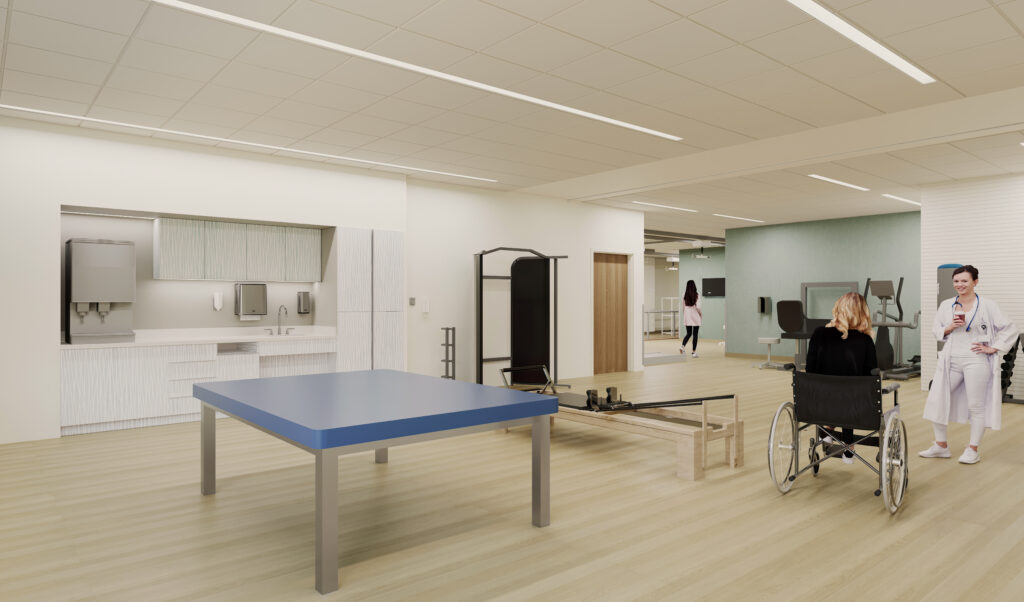
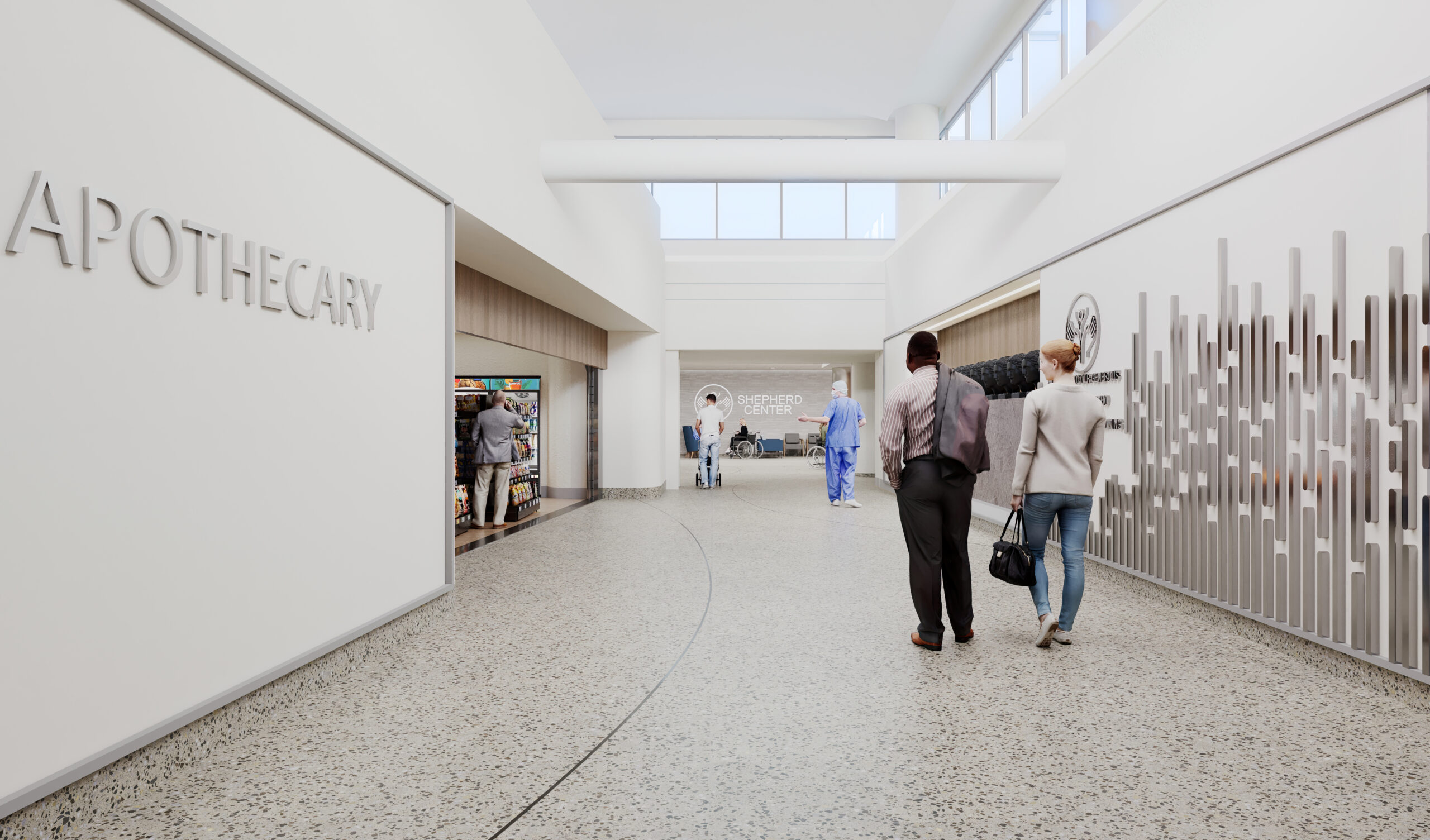
- Therapy happens everywhere. Corridors are practice zones. Courtyards are therapy landscapes. Every surface, transition, and texture supports motion, safety, and recovery.
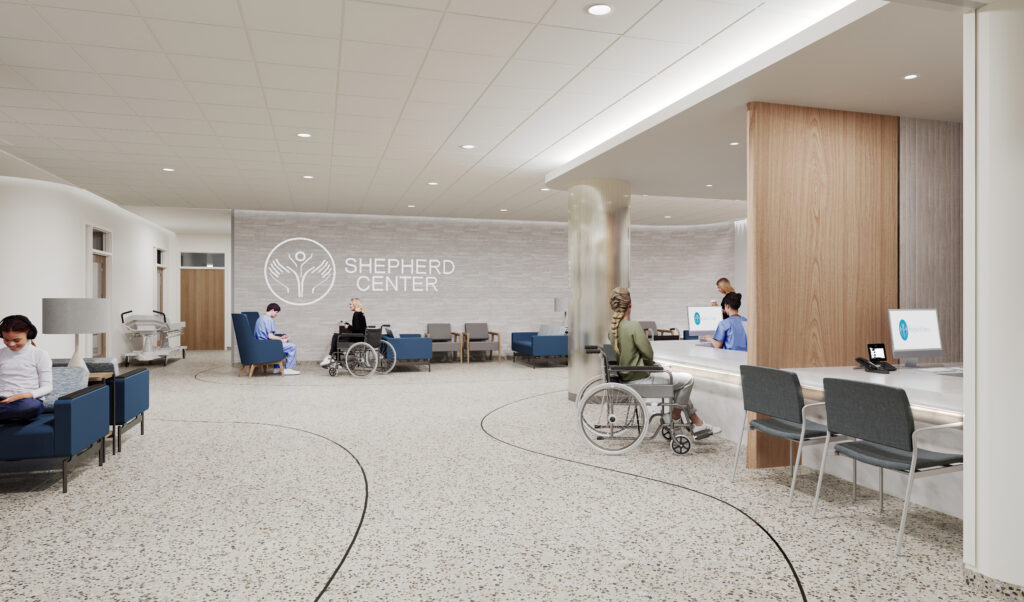
- Accessibility informs every detail. Universal design here moves far beyond typical ADA requirements. Every dimension and transition must support patients with varied mobility and neurological challenges. For that reason, the design is examined from the vantage point of a wheelchair user to ensure access is uncompromised and independence is preserved.
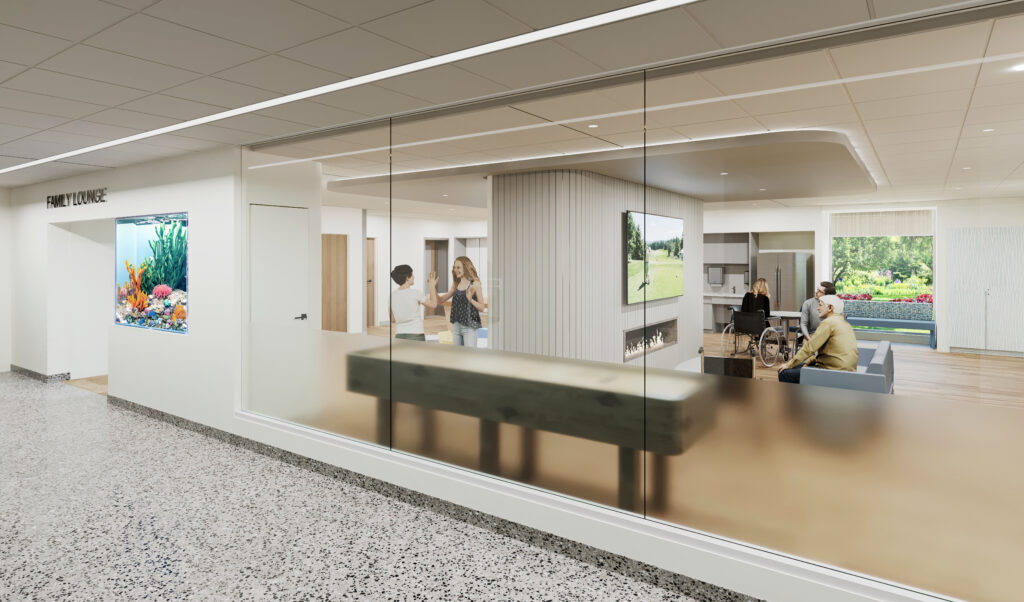
- Families are part of the equation. Shepherd Center goes beyond the treatment of patients. It teaches families. Architecture must provide the space for education and emotional connection to happen.
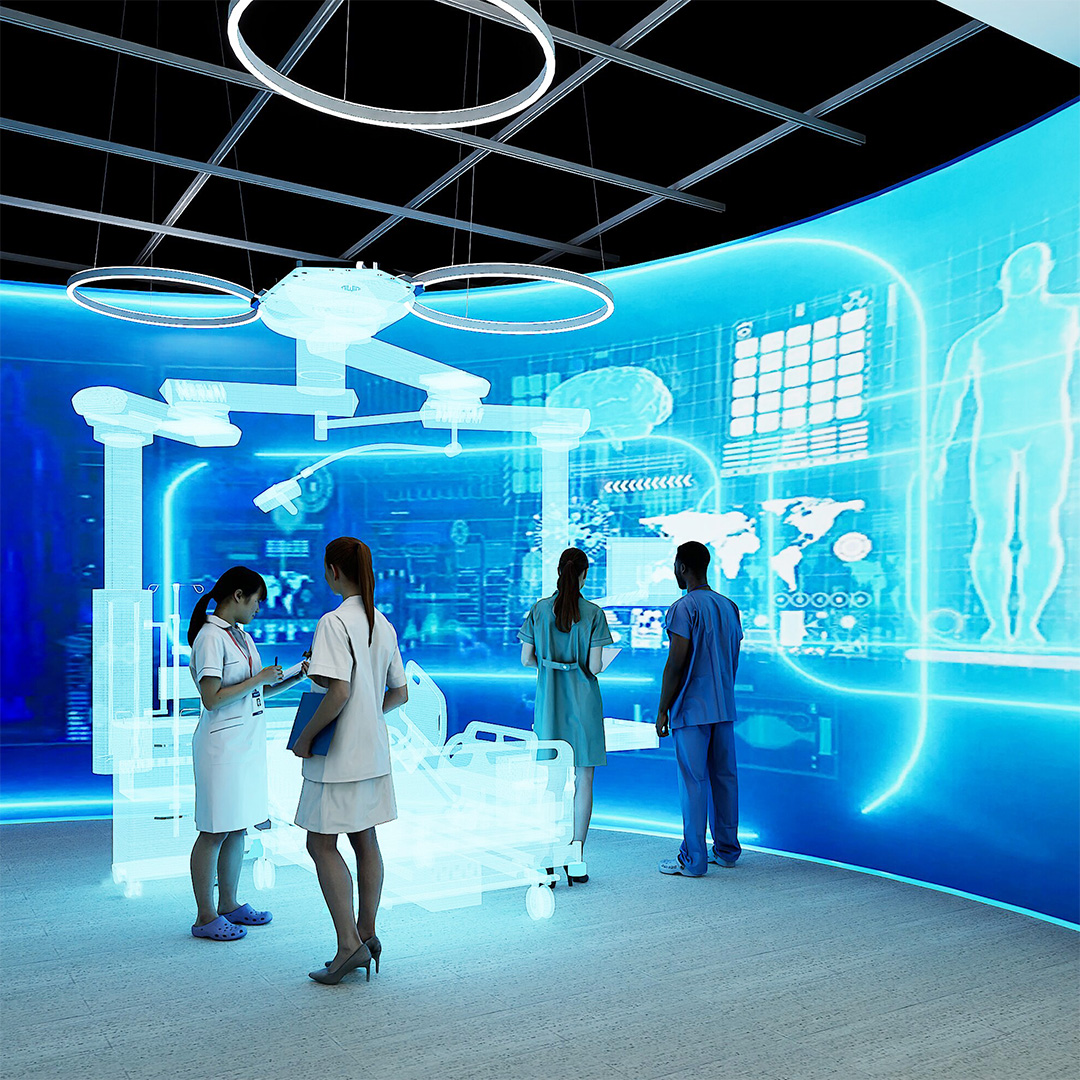
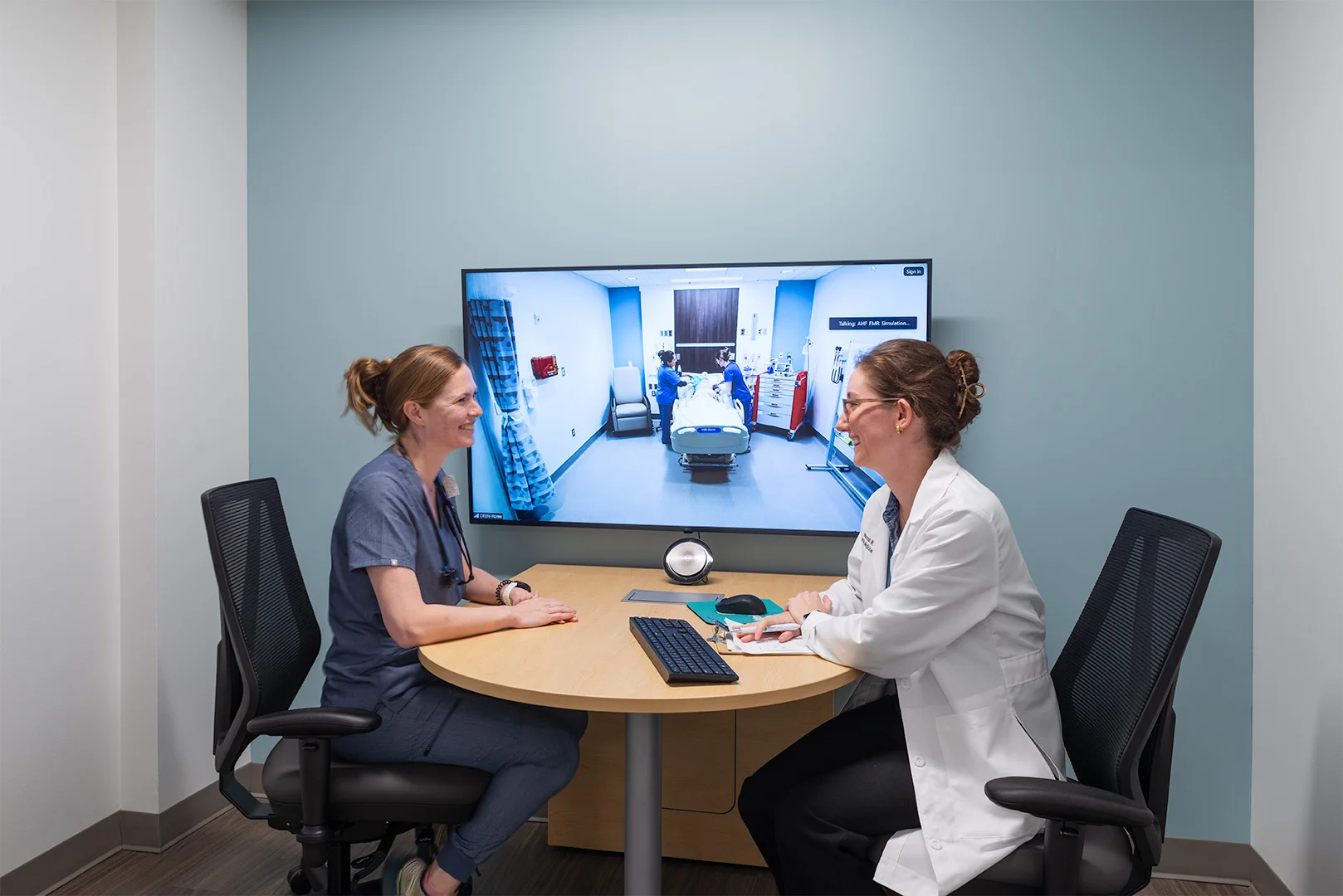
- Technology is visible, but never intrusive. From robotics to simulation labs, equipment is integrated into uplifting, human-centered environments that remind patients of how far they’ve come.
- Emotion is a design material. Natural light, warmth, texture, and sound play powerful roles in recovery. Spaces must motivate, calm, and restore dignity at every turn.
Matching Their Level of Innovation
Designing for Shepherd means adopting their mindset by constantly asking how we can do better, think differently, and anticipate what’s next. That pursuit has shaped our process and deepened how we define innovation.
We’ve learned to see adaptability not as an add-on, but as a principle. To view design through the lens of empathy and performance, always asking: how will this space respond to change, growth, and new forms of care?
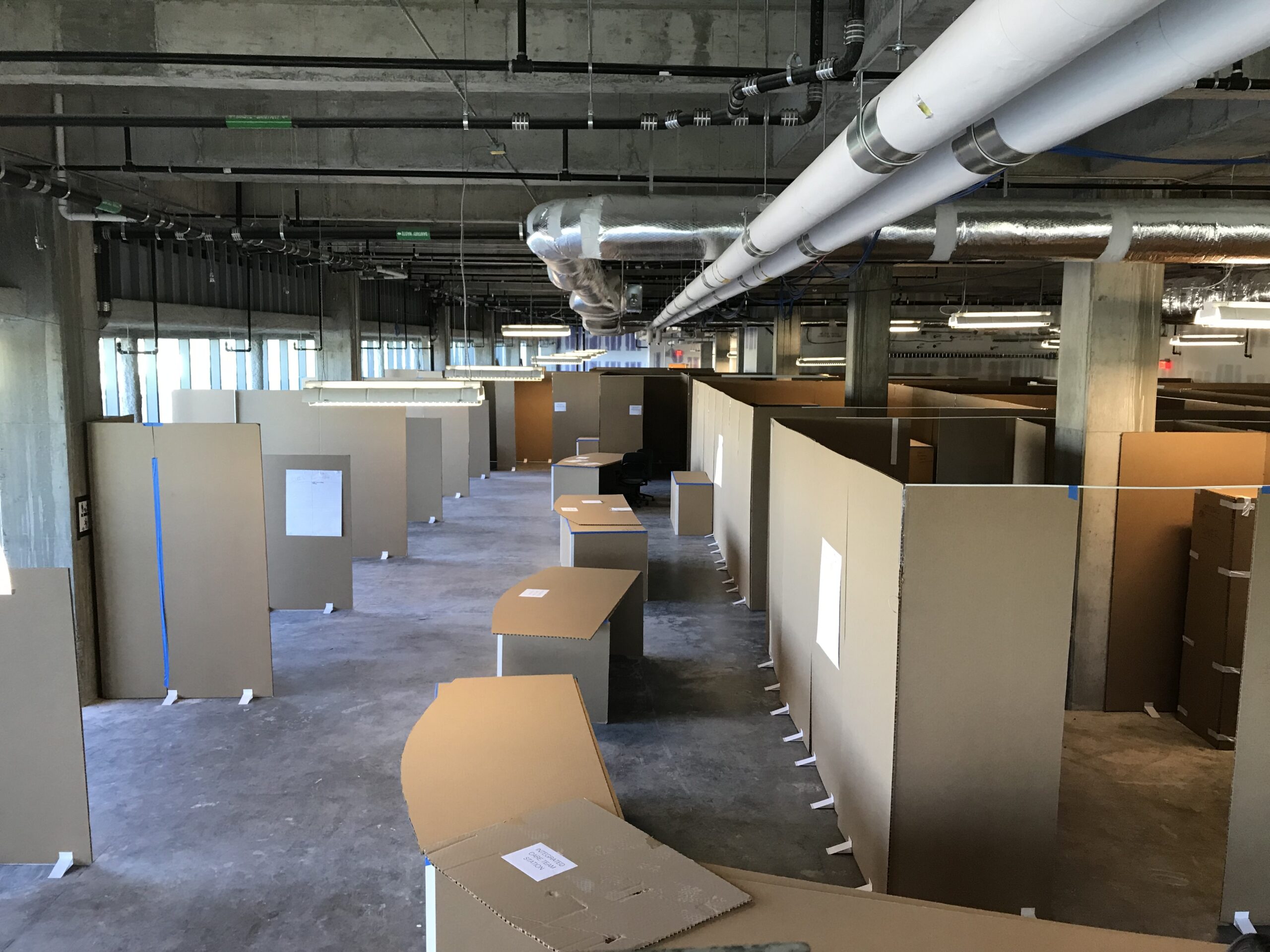
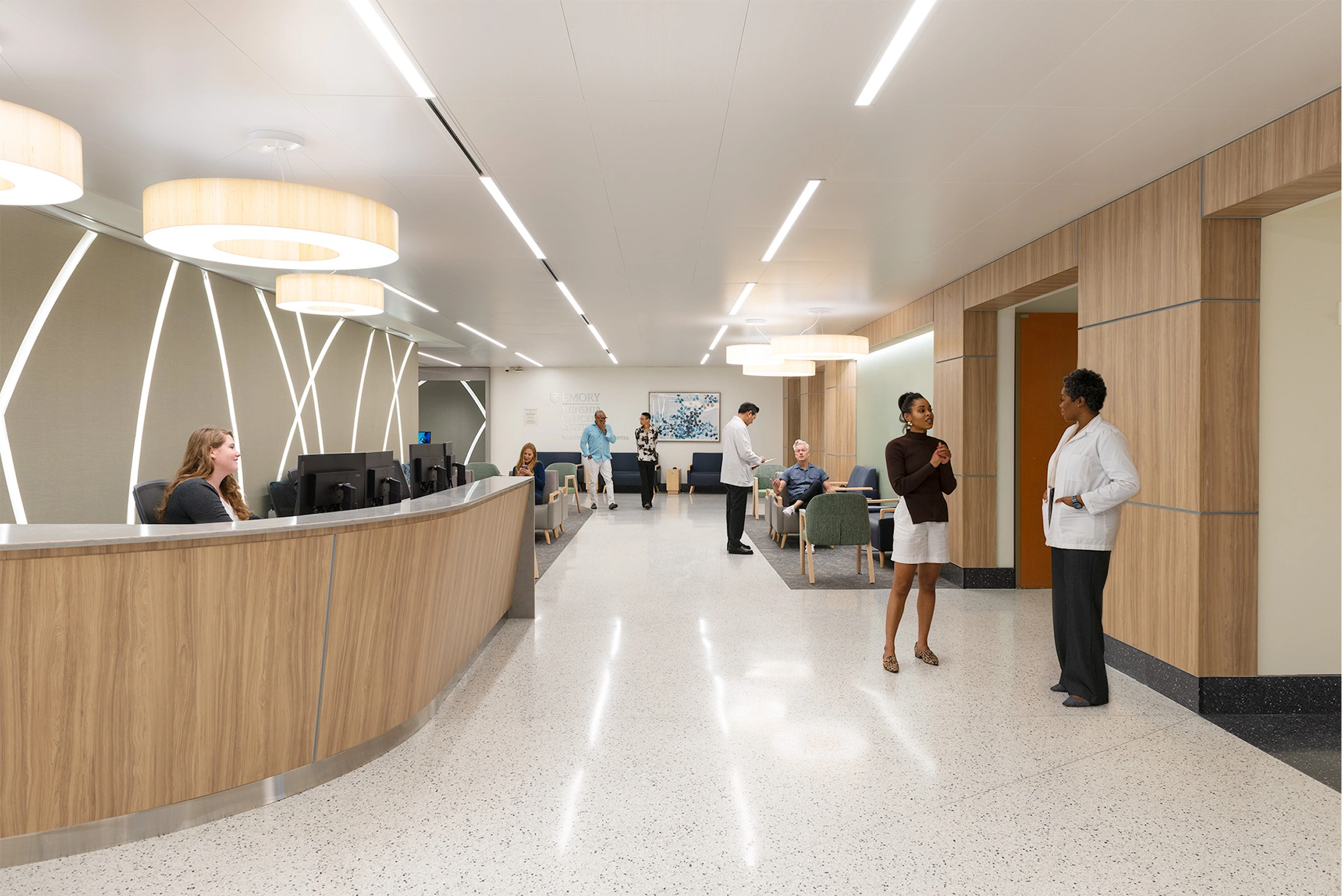
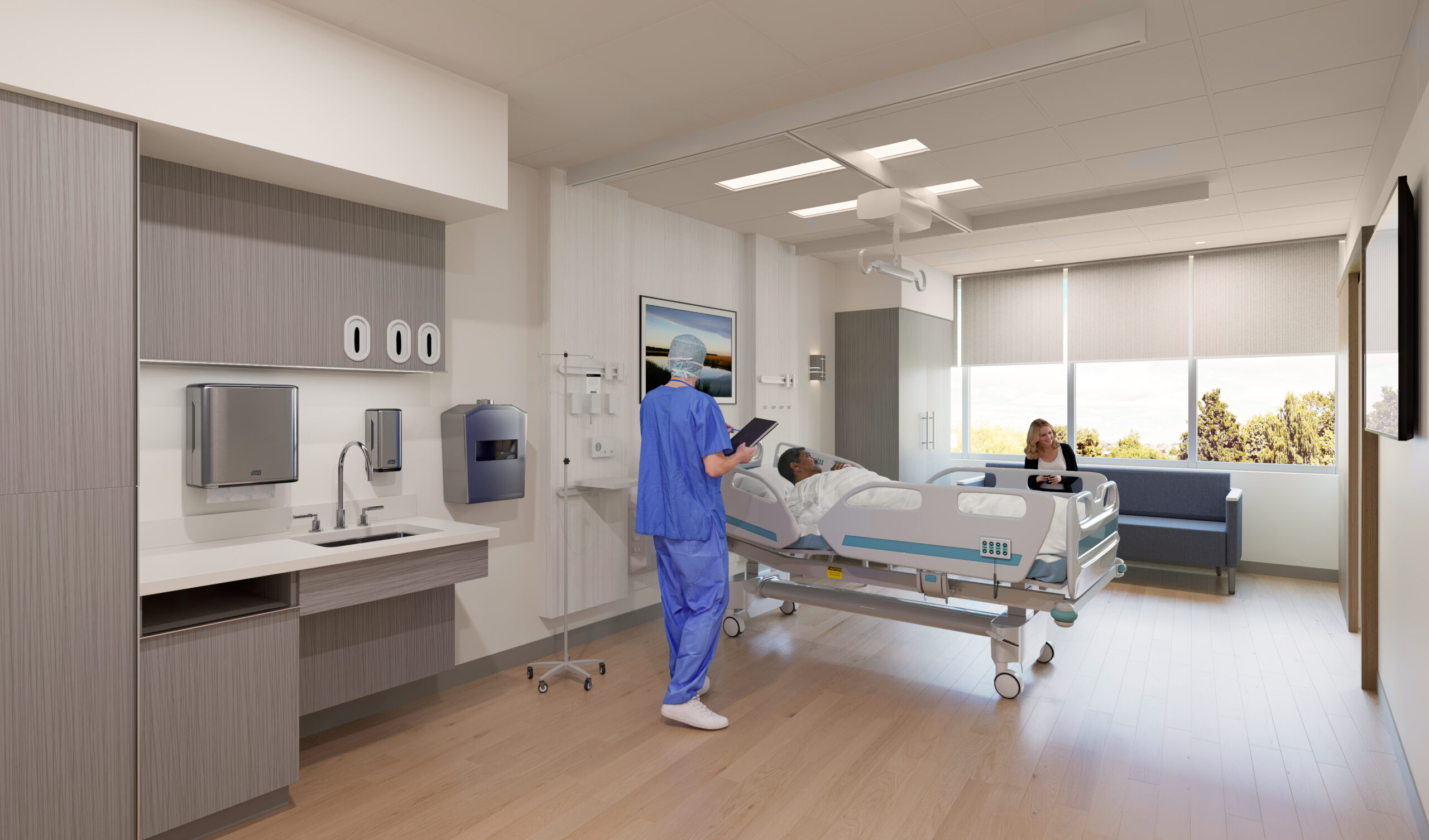
In the 2020 Building Renovation, this mindset came to life through design strategies that redefined what rehabilitation environments can be. We worked closely with Shepherd’s care teams to create universal patient rooms that flex across levels of acuity, allowing care to come to the patient rather than moving the patient through multiple settings. We reimagined corridors as active therapy spaces, widened for mobility and daylight, and supported by intuitive wayfinding that gives independence back to those relearning it.
Every decision was guided by human experience like family lounges designed for comfort and learning, recreational therapy rooms that restore a sense of normalcy, quiet spaces that support psychological recovery, and artwork that transforms corridors into galleries of hope. Even technology was approached with empathy: advanced patient engagement systems that respond to sip-and-puff controls allow patients to adjust their own environments in a quiet but powerful gesture of autonomy.
Behind it all, we worked hand-in-hand with Shepherd’s staff to make care delivery more fluid. Decentralized nurse stations, shortened travel distances, and clear sightlines help caregivers focus on what matters most: people. And because sustainability and stewardship are essential to the Center’s mission, high-performance systems and durable materials were chosen not only to conserve energy but to ensure that the spaces remain timeless and dignified for decades to come.
Architecture as a Reflection of Purpose
Working with Shepherd Center has been as much a defining experience for our team as it has been a professional engagement. It has strengthened our belief that architecture is not simply about what exists, but about what is possible, a discipline grounded in optimism, responsibility, and forward thinking.
Each time we move through Shepherd Center, we are reminded that architecture is most powerful when it recedes and allows the work of healing to take center stage. Designing in this environment has challenged us to think beyond walls and materials and to view space as an active partner in recovery. That perspective continues to shape how we design, with deeper empathy, sharper intention, and an enduring commitment to environments that support independence and resilience.