Innovation in architecture isn’t limited to new materials or cutting-edge construction methods. Sometimes it’s about rethinking the design process itself such as how we communicate ideas, how we prototype space, and how we invite clients to experience design. Today, a range of non-traditional approaches is reshaping not just what we build, but how we get there.
Cardboard Cities: Prototyping Space in Full Scale
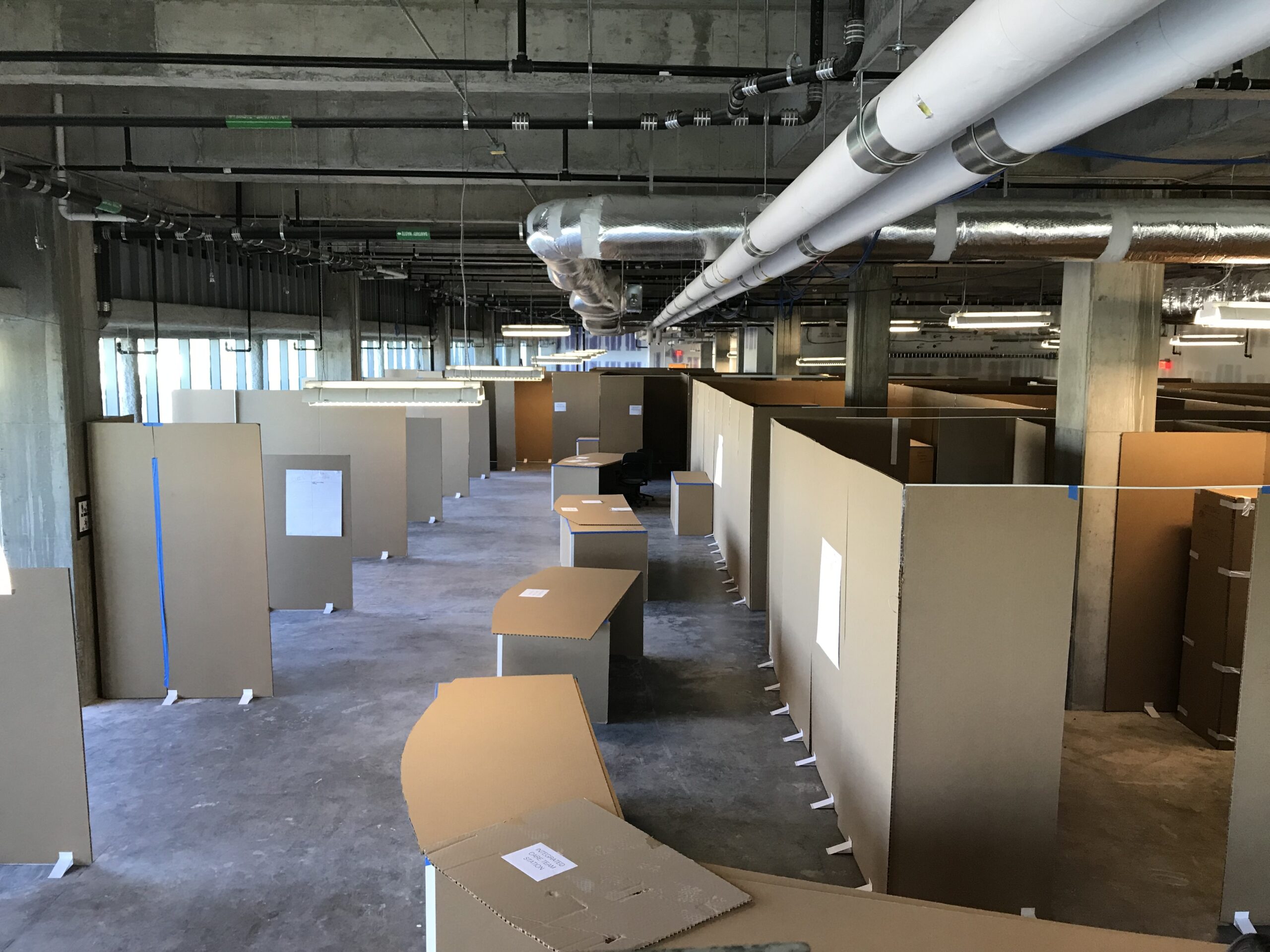
One of the most surprising yet effective tools in design is also one of the simplest: cardboard. By constructing full-scale “cardboard cities,” architects can mockup environments in three dimensions, allowing clients to walk through spaces, experience adjacencies, visualize proportions, and test scenarios before a single wall is built. These temporary mockups provide immediate clarity, turning abstract plans into tangible experiences and sparking conversations that paper drawings or digital models alone cannot.
KEY FEATURES
Paper Dolls: Mapping the Flow
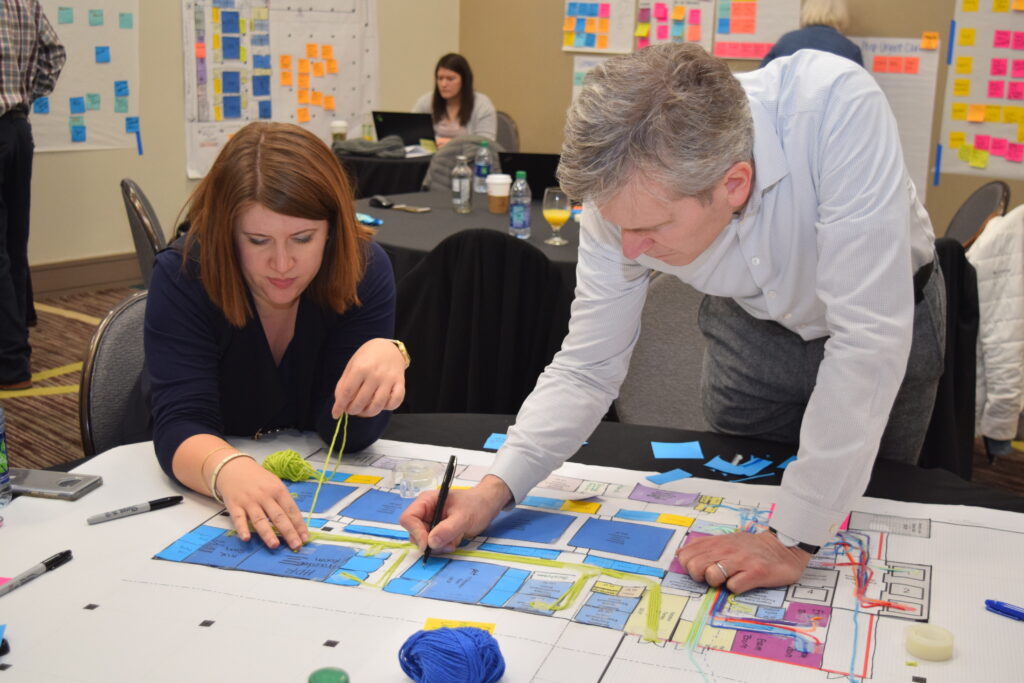
Sometimes innovation comes down to a sheet of paper. “Paper dolls” are simple cutouts representing departments, equipment, or major program elements. Laid out on a floor plan, they allow design teams and clients to test spatial relationships and visualize how much area is allotted. This exercise is often one of the first times square footages become real, sparking important conversations about priorities, flow, and trade-offs. As one of the least expensive tools in the lean design toolbox, paper dolls consistently prove to be among the most valuable, helping clients grasp scale and circulation with clarity long before walls take shape.
3D Printing: From Model to Structure
3D printing has moved far beyond scale models. Large-format printers can now fabricate building components, and in some cases entire structures, with speed and efficiency. For clients, this means design ideas can be prototyped and tested more quickly. For the profession, it opens doors to new forms, reduced material waste, and entirely new methods of construction.
Immersive Design with AR and VR
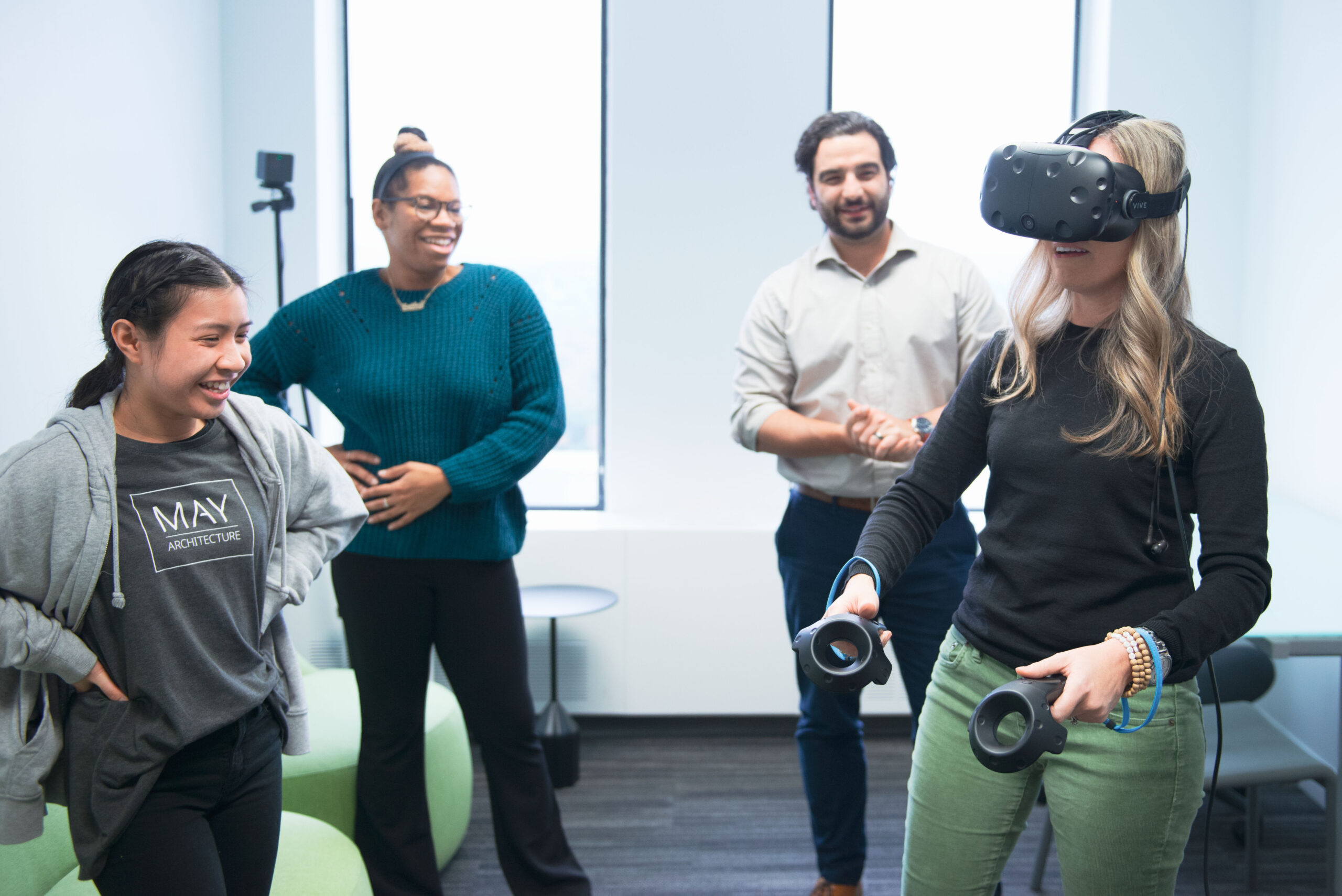
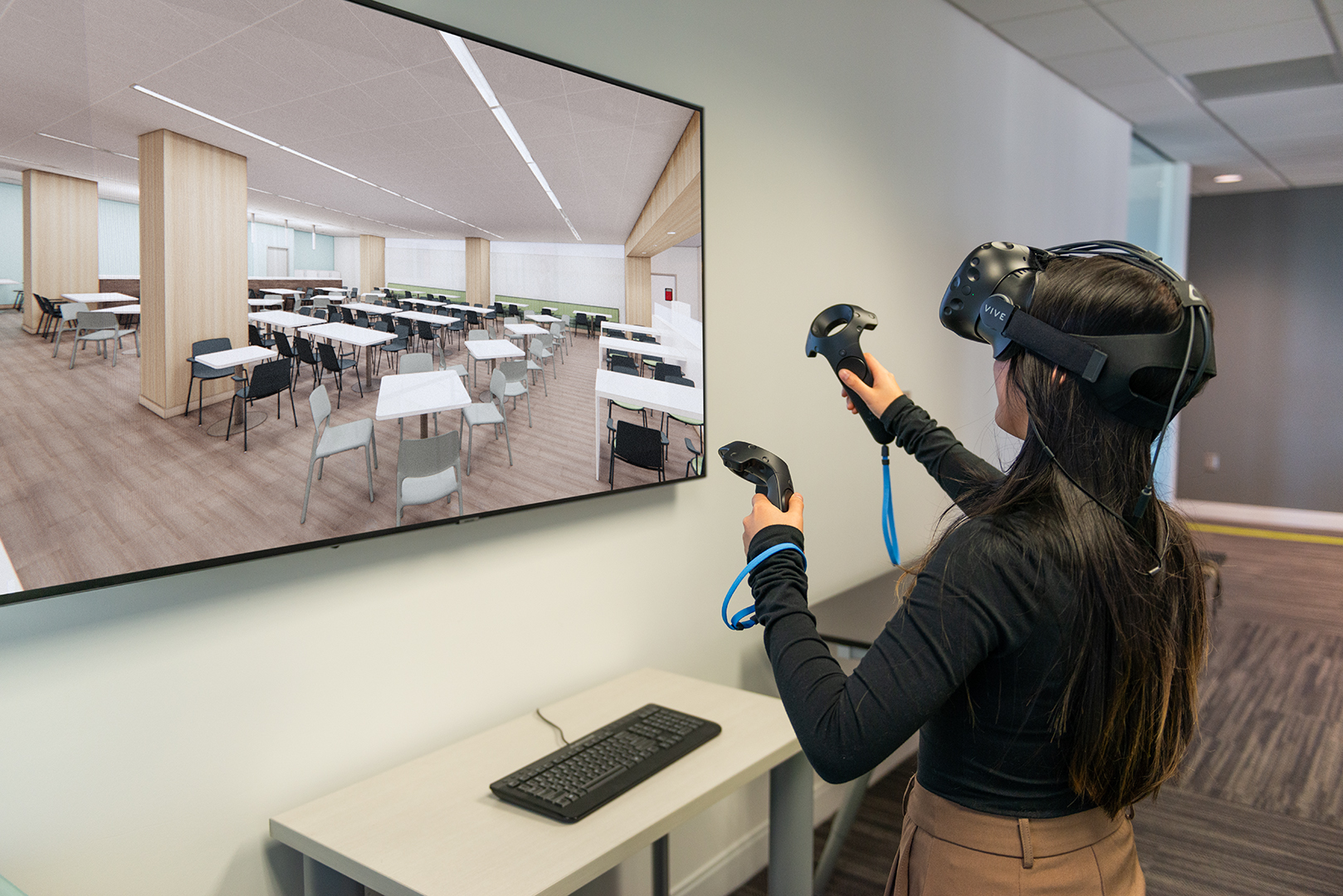
Augmented and virtual reality have revolutionized how stakeholders experience design. Instead of interpreting a plan, clients can “step into” a building long before it’s constructed. These immersive tools allow design teams to test flow, daylight, and spatial relationships in real time. They do more than enhance visualization. They elevate collaboration by aligning everyone around a shared, experiential understanding of the design.
Parametric and Generative Design: Testing What’s Possible
Parametric and generative design allow architects to explore thousands of variations in response to performance goals, site constraints, or user needs. Instead of arriving at a single solution, teams can rapidly test “what if” scenarios, optimizing for efficiency, daylight, or circulation patterns. This computational approach is not meant to replace creativity. It expands it, giving architects the ability to push design exploration further and faster.
Digital Twins and Scenario Modeling: Seeing Beyond the Plan
Design is no longer confined to static drawings. Digital twins create a living model of a building by mirroring its systems and performance in real time. Paired with scenario modeling, these tools allow clients to compare options side by side and understand not only how a space will look, but how it will function. From circulation and energy use to long-term adaptability, these insights give stakeholders the confidence to make decisions grounded in both vision and evidence.
Beyond Convention: Where Innovation Emerges
What unites these approaches is not the technology or the material, but rather, it’s the mindset. Innovation comes from a willingness to explore, to question, and to use unexpected tools to make design more collaborative and more effective. Whether it’s cardboard walls, robotic fabrication, immersive VR, or digital twins, non-traditional methods push us to think differently about how architecture is conceived and realized.
At May Architecture, we view these explorations as more than experiments. They are proof that the best design outcomes often emerge when we step beyond convention and embrace new ways of seeing, testing, and building. Because the future of architecture should not be bound by tradition. It should be shaped by the creativity and curiosity we bring to the process.